


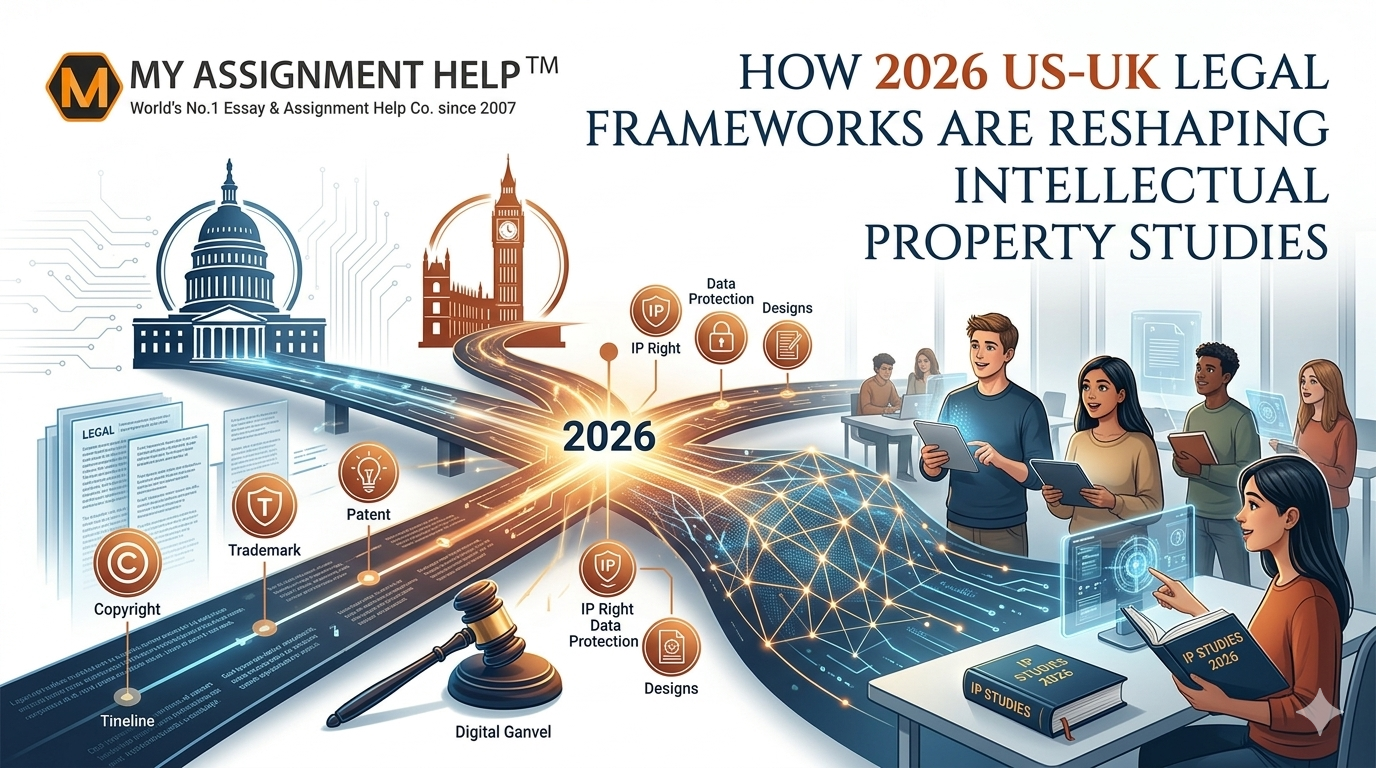
In 2026, the global legal landscape for Intellectual Property (IP) is undergoing its most radical transformation since the mid-90s. As the United States and the United Kingdom forge deeper technological ties through the 2025 Technology Prosperity Deal and the evolving Atlantic Declaration, the academic world is struggling to keep pace. For law students in the US and UK, the old textbooks are becoming obsolete as new frameworks for AI-generated content, cross-border patent eligibility, and digital trade take center stage.
The convergence of these two powerhouses is not just a diplomatic achievement; it is a seismic shift in how IP is taught and practiced. From the US Supreme Court’s 2026 rulings on patent eligibility to the UK’s new “One IPO” digital transformation, the boundaries of domestic law are blurring. This article explores how these 2026 frameworks are fundamentally reshaping Intellectual Property studies and what it means for the next generation of legal scholars.
The US-UK Technology Prosperity Deal: A New Academic Core
The Memorandum of Understanding (MOU) signed in late 2025 regarding the “Technology Prosperity Deal” has made bilateral cooperation the cornerstone of 2026 IP curricula. Previously, students might have studied US and UK law in silos. Now, the emphasis is on “Pro-Innovation AI Policy Frameworks” that are being co-developed by both nations.
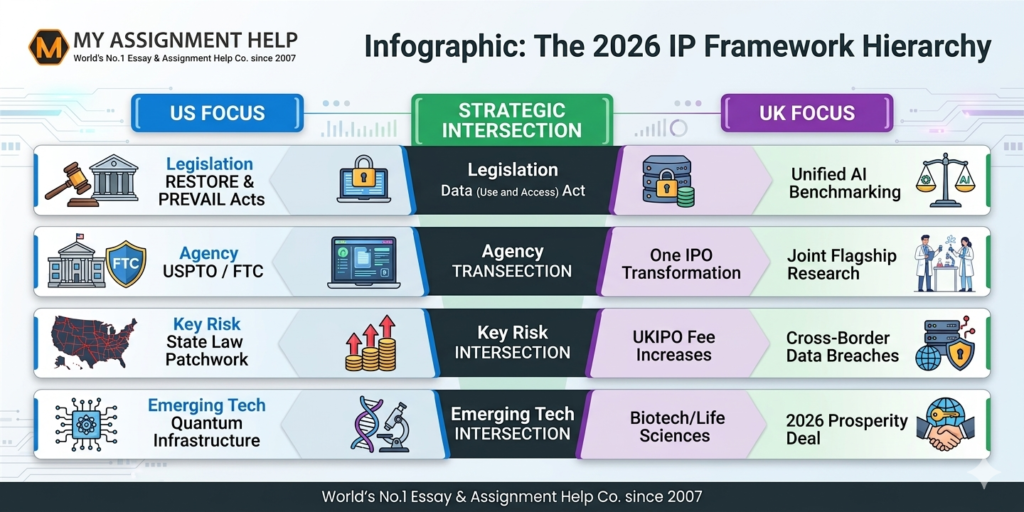
For many students, this shift has led to an overwhelming increase in coursework complexity. Navigating the nuances of the RESTORE Act in the US while simultaneously understanding the UK’s Data (Use and Access) Act requirements is a daunting task. Consequently, many scholars have turned to professional law assignment help to bridge the gap between transatlantic theories and practical application. This specialized support ensures that students can master the intricate “Zero-Retention” and “No-Training” clauses that are now standard in 2026 legal contracts.
Generative AI: From Case Law to Curriculum
As of March 2026, the “Fair Use” debate in the US has reached a fever pitch with the fallout from Getty Images (US) Inc v. Stability AI Ltd. This case, alongside the UK’s 2026 Creative Content Exchange pilot, has forced law schools to redesign their copyright modules.
The academic focus has shifted from “who owns the work” to “who owns the training data.” This involves:
- Prompt Engineering Liability: Determining if a human prompt is enough for “authorship.”
- Secondary Infringement: Managing the importation of foreign-trained AI models.
- Remuneration Models: Studying the new UK-led “Creative Content Exchange” which pays creators for AI training access.
With the 2026 bar exams now incorporating these fast-moving AI precedents, students often require expert assignment writing help to ensure their research reflects the latest 2026 judicial opinions rather than outdated 2024 principles.
Cross-Border Litigation and the “Disputes Forecast”
According to recent 2026 industry surveys, over 82% of organizations are now concerned about cross-border multi-agency investigations. This has led to a surge in the study of Private International Law within IP programs.
Students are now required to analyze how US state-level laws, like the Colorado AI Act (effective June 2026) and the Texas Responsible AI Governance Act, interact with UK federal regulations. The “Global Disputes Landscape” has become a mandatory part of IP studies, focusing on:
- PADFAA (2024/26) Compliance: Preventing sensitive data transfers to “foreign adversaries.”
- UKIPO Fee Hikes: Managing global IP portfolios after the April 2026 fee increases.
- Harmonized Standards: The drive toward shared US-UK standards in 6G and Quantum computing.
Key Takeaways for 2026 Law Students
- Bilateral Focus: Mastery of only one jurisdiction is no longer sufficient; the US-UK Technology Prosperity Deal requires a dual understanding of both frameworks.
- AI Specialization: Copyright law is now inseparable from AI training data ethics and “Agentic AI” liability.
- Data Sovereignty: Understanding cross-border data transfer acts (like PADFAA) is now as critical as understanding patent law itself.
- Dynamic Learning: With laws changing quarterly in 2026, students must rely on real-time legal databases and professional academic support to stay current.
FAQ Section
Q1: How does the 2026 US-UK Technology Prosperity Deal affect my law degree?
The deal integrates US and UK standards for AI, Quantum, and 6G. This means your assignments must now reflect “transatlantic compliance” rather than just domestic case law.
Q2: Are US students required to study UK law in 2026?
While not mandatory for all, those specializing in Intellectual Property, International Trade, or Tech Law find it essential due to the high volume of cross-border litigation between US and UK firms.
Q3: What is the most significant IP law change in early 2026?
The implementation of the UK’s “One IPO” digital system and the US Supreme Court’s focus on “Skinny Label” induced infringement in the pharmaceutical sector are the two most discussed topics.
Q4: Can professional academic services help with 2026-specific case law?
Yes. Services like MyAssignmentHelp specialize in real-time legal updates, ensuring your papers include the latest 2026 precedents, such as the Getty v. Stability AI appeal outcomes.
Author Profile
Dr. Alistair Vance
Senior Academic Consultant at MyAssignmentHelp
Dr. Vance is a former lecturer in International Law with over 15 years of experience in transatlantic IP frameworks. He currently specializes in helping students navigate the complexities of 2026 legal reforms, providing high-level guidance for LLM and JD candidates across the US and UK.
