


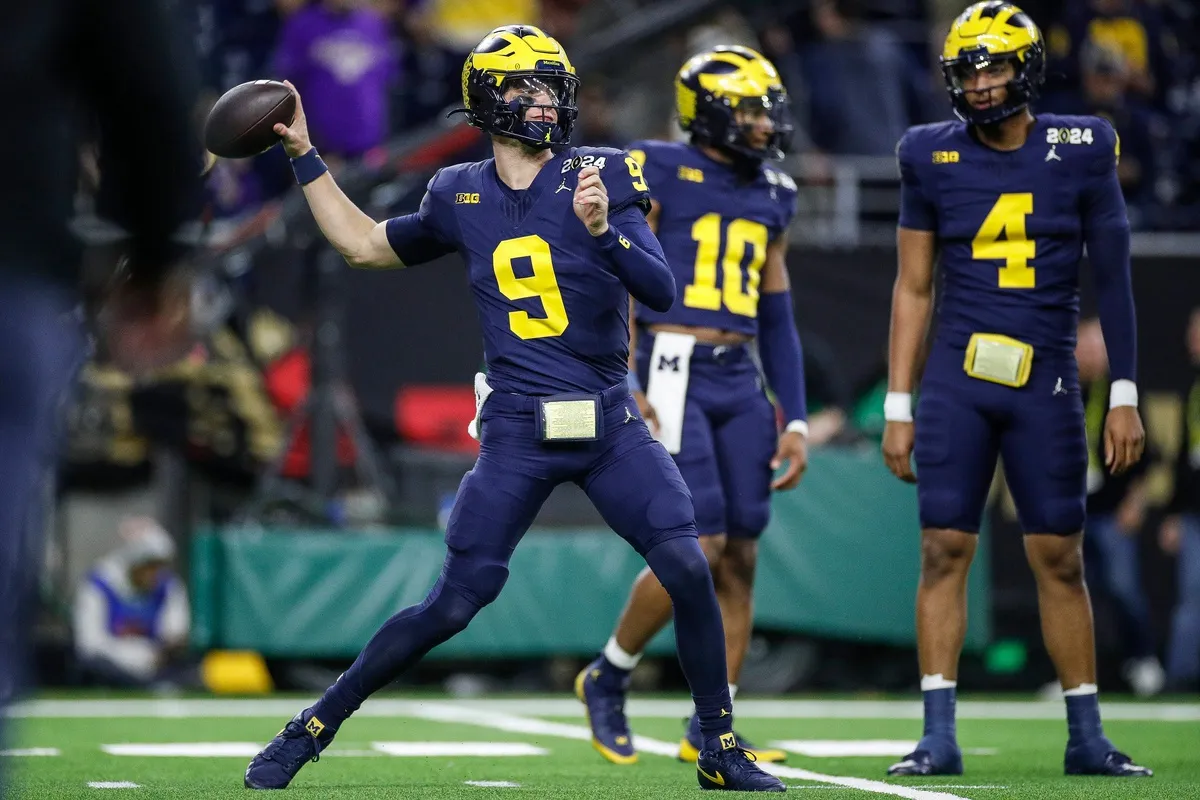
Introduction to JJ McCarthy and His Background
JJ McCarthy, born on July 24, 2003, in La Grange, Illinois, has quickly garnered attention in the world of college football. His early fascination with the sport began at a young age, and it was clear from the outset that he possessed a unique talent that would later define his career. McCarthy attended the renowned Nazareth Academy in Illinois, where he became the starting quarterback as a freshman, displaying remarkable skills that would soon set him apart from his peers.
During his high school career, jj mccarthy 40 time led Nazareth Academy to a state championship, solidifying his reputation as one of the top quarterbacks in his class. His achievements did not go unnoticed; he was named to the All-State team and regularly featured in recruiting discussions. Known for his strong arm, precision passing, and exceptional athleticism, he quickly became a coveted prospect for numerous collegiate programs across the nation.
McCarthy’s play style is characterized by an impressive combination of speed, agility, and decision-making, making him a formidable force on the field. His ability to extend plays with his legs and make accurate throws on the run has drawn comparisons to some of the game’s best quarterbacks. This agility has also resulted in impressive numbers when measuring his speed, including his jj mccarthy 40 time, which showcases his capability not just as a passer but as a dynamic playmaker.
His journey to college football came to fruition when he committed to the University of Michigan, further elevating his profile within the sport. As he transitioned to college football, McCarthy continued to excel, building upon his high school successes and embracing the competitive atmosphere of collegiate athletics. His early achievements foreshadow a promising future, and his athleticism will undoubtedly play a crucial role as he develops into a top-tier quarterback.
Understanding the 40-Yard Dash
The 40-yard dash is a standard measure used in American football to gauge a player’s straight-line speed over a short distance. In its essence, this sprint consists of a timed race covering 40 yards, typically conducted on a track or turf field. It serves as a vital benchmark during the NFL Combine and college pro days, where players showcase their athletic abilities to scouts, coaches, and team executives. The significance of the 40 time extends beyond mere numbers, as it offers insight into a player’s overall speed and explosiveness, critical traits for success on the football field.
For quarterbacks like JJ McCarthy, speed is an essential facet of their performance. Although the traditional role of a quarterback emphasizes passing abilities, the capacity to evade defenders and create plays with one’s legs is paramount. A fast 40 time allows quarterbacks to extend plays, escape pressures, and contribute to their team’s offensive versatility. Consequently, evaluators pay close attention to these metrics, as they help determine a player’s potential in high-pressure situations.
When assessing talent, scouts often recognize that speed alone does not define a player’s capabilities on the field. However, the JJ McCarthy 40 time can highlight an athlete’s agility and acceleration, factors that effectively contribute to their overall performance. Furthermore, various drills and training programs can influence these results, allowing players to improve their speed through dedicated preparation and conditioning. As a result, the 40 time acts as one of many critical measurements in evaluating talent and potential in football, emphasizing the ongoing importance of speed in the sport.
JJ McCarthy’s 40 Time: The Numbers and Comparisons
JJ McCarthy, a promising young quarterback, recently clocked an impressive 40-yard dash time that has elicited much excitement among scouts and fans alike. His recorded time of 4.58 seconds not only showcases his impressive athleticism but also positions him favorably among his contemporaries. In the 2023 NFL Draft class, this speed is notable, particularly when compared to other quarterbacks such as Bryce Young and CJ Stroud, who recorded times of 4.80 and 4.66 seconds, respectively.
Historically, McCarthy’s speed places him in an elite group of quarterbacks who possess both passing and rushing capabilities. For context, notable quarterbacks from previous drafts who have matched or surpassed this speed include Lamar Jackson, who clocked a blazing 4.34 seconds, underscoring a trend where mobile quarterbacks are becoming highly sought after in today’s game.
Analyzing JJ McCarthy’s 40 time not only highlights his capacity for maneuvering within the pocket and escaping pressure but also reflects his potential for developing into a dual-threat quarterback. His ability to maintain speed while throwing on the run is a considerable asset. As NFL teams increasingly prioritize mobility and agility in their signal-callers, McCarthy’s performance during drills showcases how he might excel at the professional level.
In conclusion, JJ McCarthy’s 40-yard dash time of 4.58 seconds positions him as one of the faster quarterbacks from his draft class. This level of speed offers a glimpse into his dynamic playing style and could greatly influence his future performance, making him a formidable competitor in the quarterback landscape.
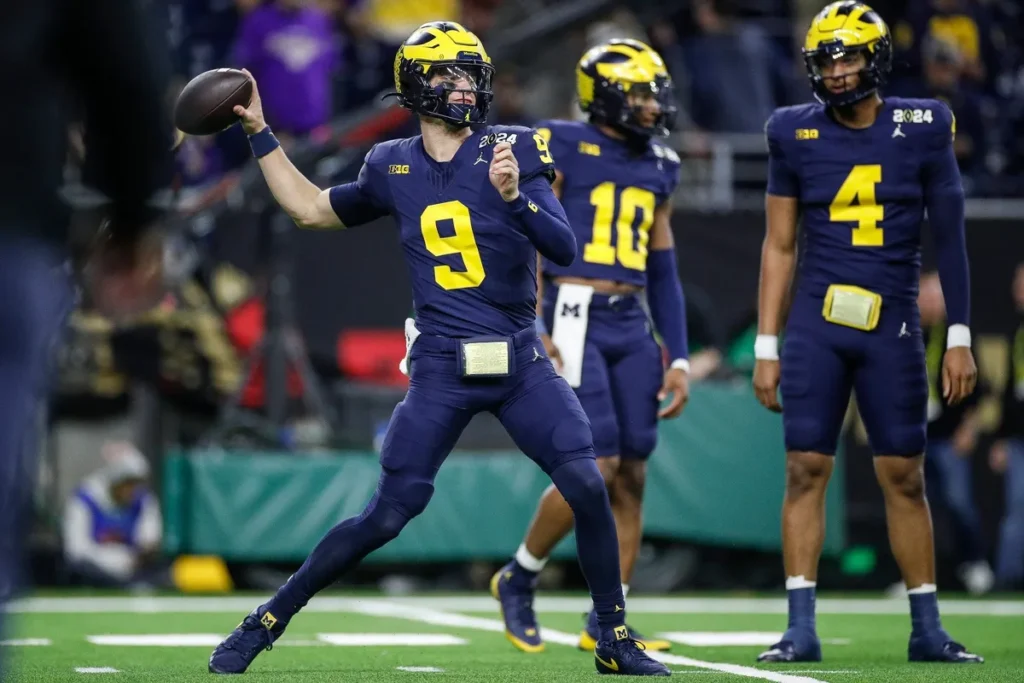
Implications of JJ McCarthy’s 40 Time on His Career
JJ McCarthy’s 40 time serves as a crucial benchmark in evaluating his potential as a professional quarterback. A swift time not only underscores his speed but also highlights his agility and ability to maneuver within the confines of a pocket. This characteristic is essential for a quarterback who must evade defenders while maintaining focus on the passing game. As the game evolves to prize mobility and quick decision-making, McCarthy’s speed could directly enhance his effectiveness on the field.
The implications of McCarthy’s impressive speed extend beyond just on-field performance. In the competitive landscape of college football recruitment, a strong 40 time can significantly improve a player’s appeal to prospective college programs. Coaches often prioritize athleticism and agility when assessing recruits, and a notable time could positively influence recruitment offers, propelling McCarthy into prestigious programs that prioritize a dynamic offense.
From a professional perspective, teams in the NFL increasingly seek quarterbacks who can both pass effectively and demonstrate mobility. McCarthy’s ability to execute plays on the run or escape the pocket adds a layer of complexity to his skill set. This versatility could make him a compelling choice for teams looking to implement a more adaptive offensive strategy. Expert analyses suggest that his 40 time positions him favorably among peer quarterbacks who may lack the same level of speed, thus broadening his opportunities for advancement in the draft process.
In conclusion, JJ McCarthy’s 40 time not only affects his immediate playing style but also has potential long-term ramifications for his career trajectory. Teams will undoubtedly weigh his speed alongside other competencies, and as they do, McCarthy’s unique athletic attributes could set him apart in a competitive field.
